The Brief
Tallis Rowe is a made-up office refurbishment contractor in London. Its work is refurbishing offices while tenants are still in them: lease-end and dilapidations works, Cat A refreshes for landlords, and phased night and weekend working. Its buyers are landlords, asset and property managers, and occupiers.
It started with the websites of London refurbishment and fit-out contractors. Most use dark templates with small galleries and no sizes or programmes. None of them shows how they keep a building running during the works, which is the one thing a landlord with tenants in occupation needs to see. So the brief was a site built around that promise, with its own brand and plenty of photos.
The Search Demand It Could Win
Refurbishment searches in the UK are high in volume and low in competition. These are monthly UK searches from Ahrefs, with keyword difficulty (KD) out of 100:
| Search term | Searches a month | KD |
|---|---|---|
| office refurbishment | 1,400 | 0 |
| office fit out london | 800 | 4 |
| office refurbishment companies | 700 | 2 |
| commercial refurbishment | 500 | 0 |
| refurbishment contractors | 200 | 0 |
A KD of 0 to 4 means a well-built page with real projects can rank without hundreds of backlinks. Each service on the concept site would become its own page aimed at one of these terms, with the projects as proof.
1. Lead With the Promise Buyers Care About

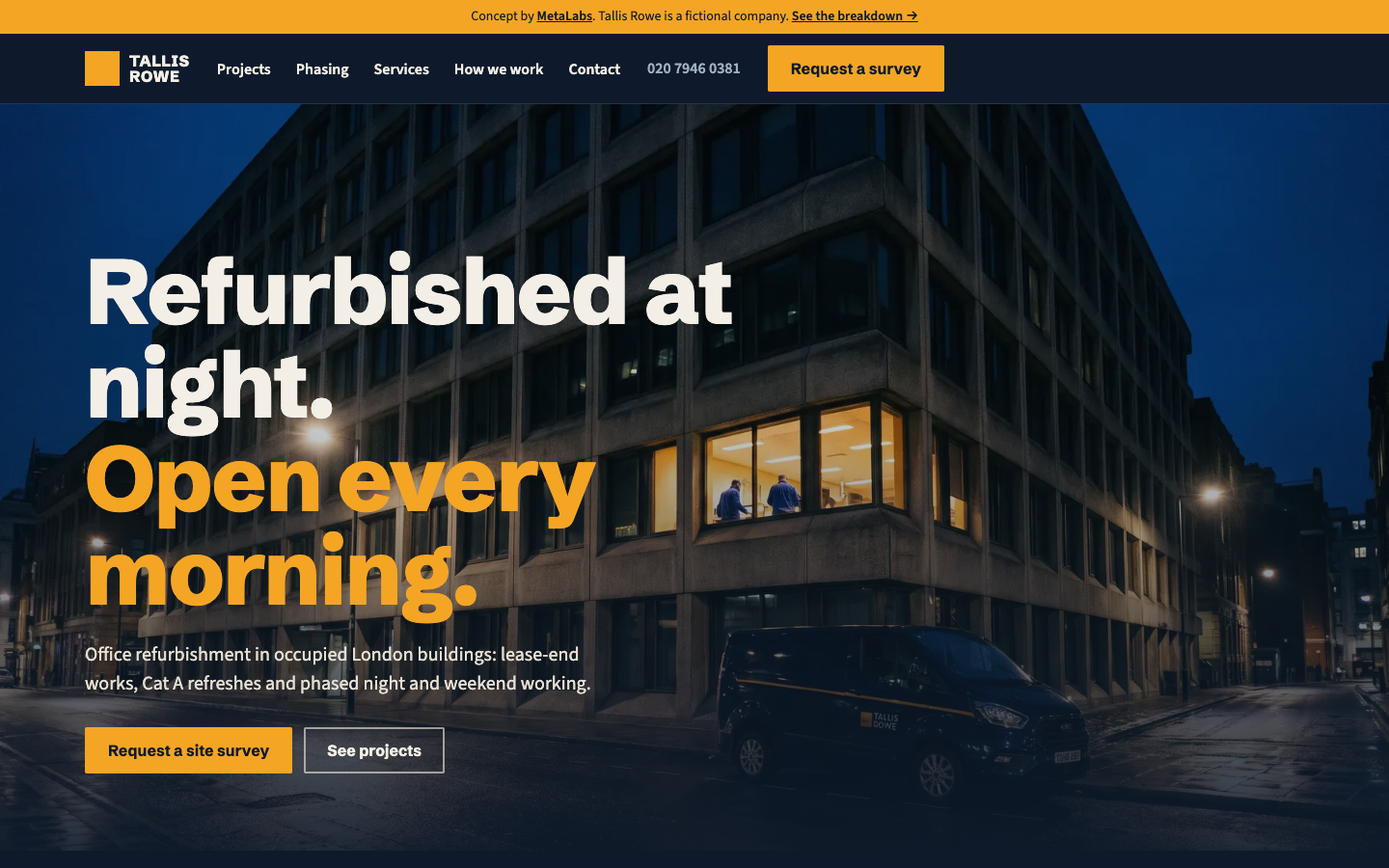
What it does: One headline ("Refurbished at night. Open every morning."), one line naming the work and the city, and a site survey button. The photo shows the promise: a dark building with one floor lit and the firm's van outside.
Why it matters: A landlord with tenants in occupation has one fear: complaints and lost rent while the works happen. Most refurbishment sites open with a generic office photo. This one answers the fear in six words.
2. Count What Matters to a Landlord

What it does: Four figures, including floors refurbished with tenants in and mornings handed back late, then the accreditations as plain text.
Why it matters: Years and square feet are expected. The two refurb-specific numbers are the ones a property manager will remember, because they measure the thing they're buying.
3. Projects With Size, Location and Programme
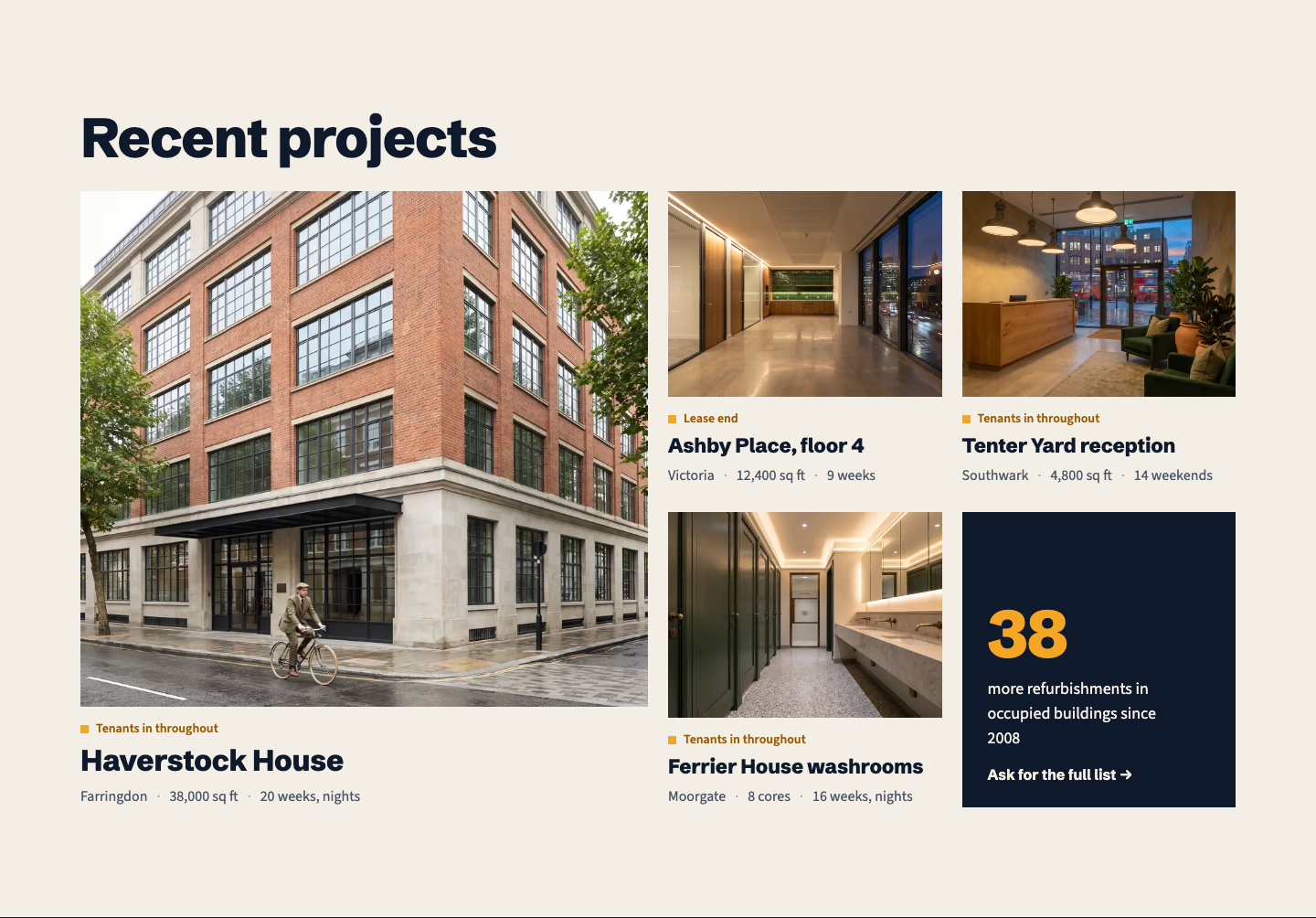
What it does: One large project and three smaller ones. Each card has a photo, the building, the area, the size and the programme, plus a tag saying whether tenants stayed in. A final tile offers the full list.
Why it matters: Asset managers compare contractors by similar buildings. A card that says "Farringdon, 38,000 sq ft, 20 weeks, nights" answers that faster than a gallery.
4. The Signature: a Building That Lights Up
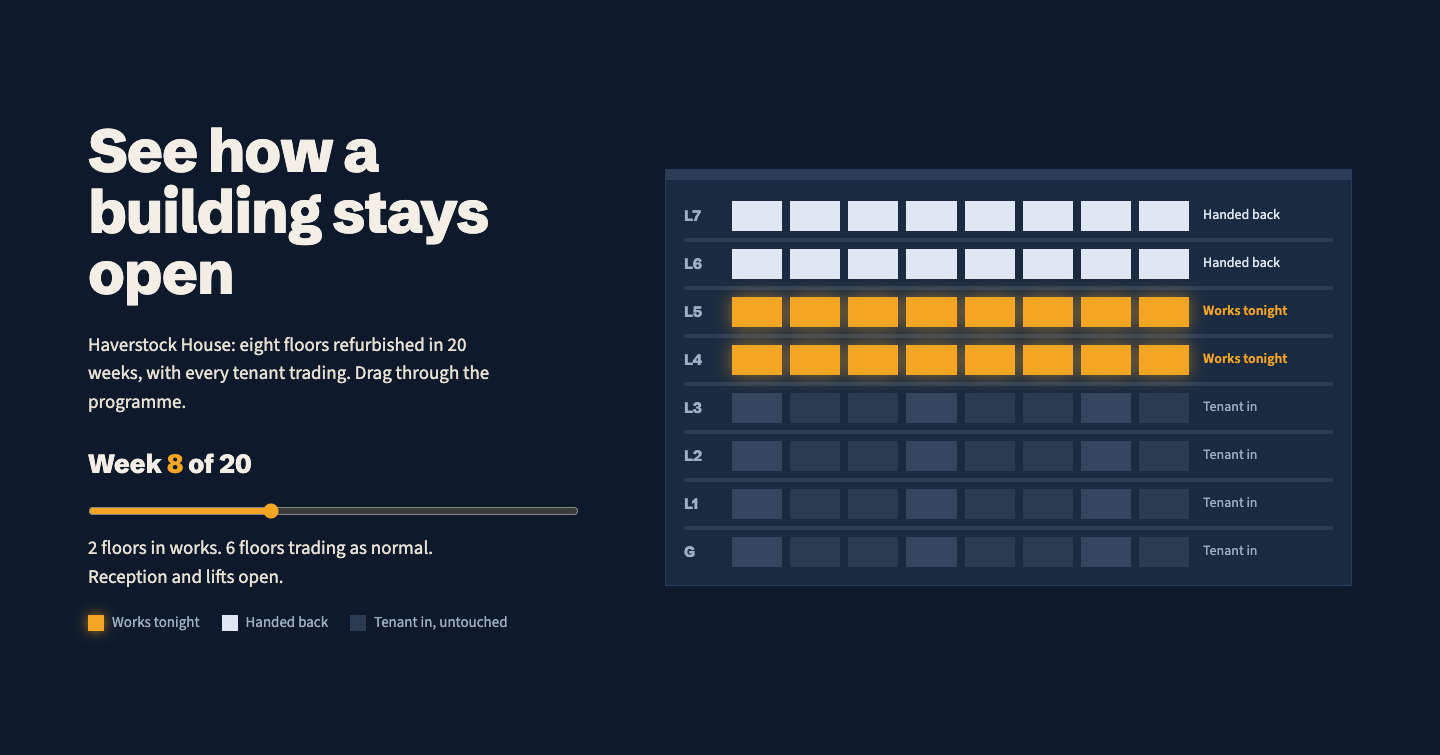
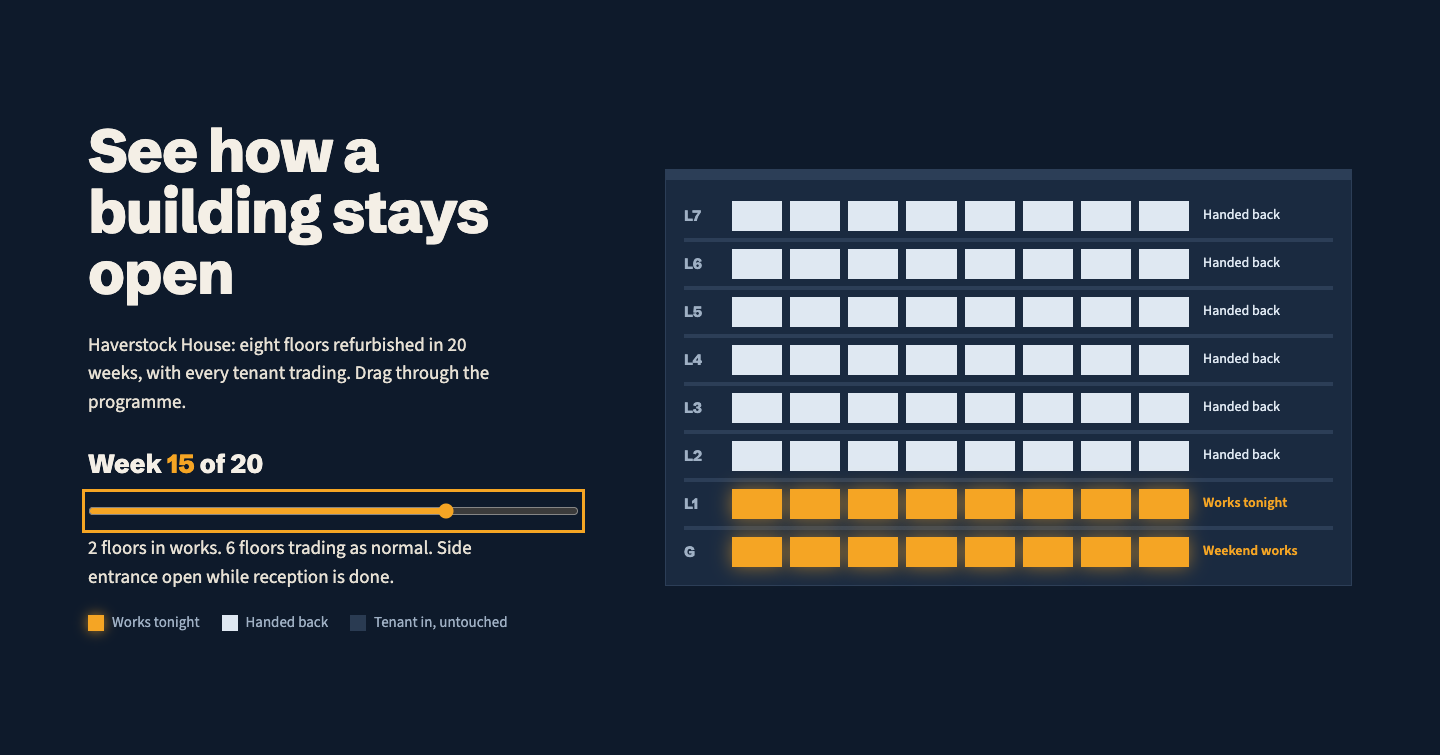
What it does: A section through an eight-storey building. Drag the slider through the 20-week programme and the floors light up amber as they're worked on, turn white when they're handed back, and stay dark while tenants carry on as normal. A line underneath counts the floors in works and the floors trading.
Why it matters: Every refurbishment contractor says "minimal disruption". This shows it. A property manager can see the phasing for themselves in ten seconds, and it's the part of the site people remember and share.
5. Four Services, Each With Its Own Photo
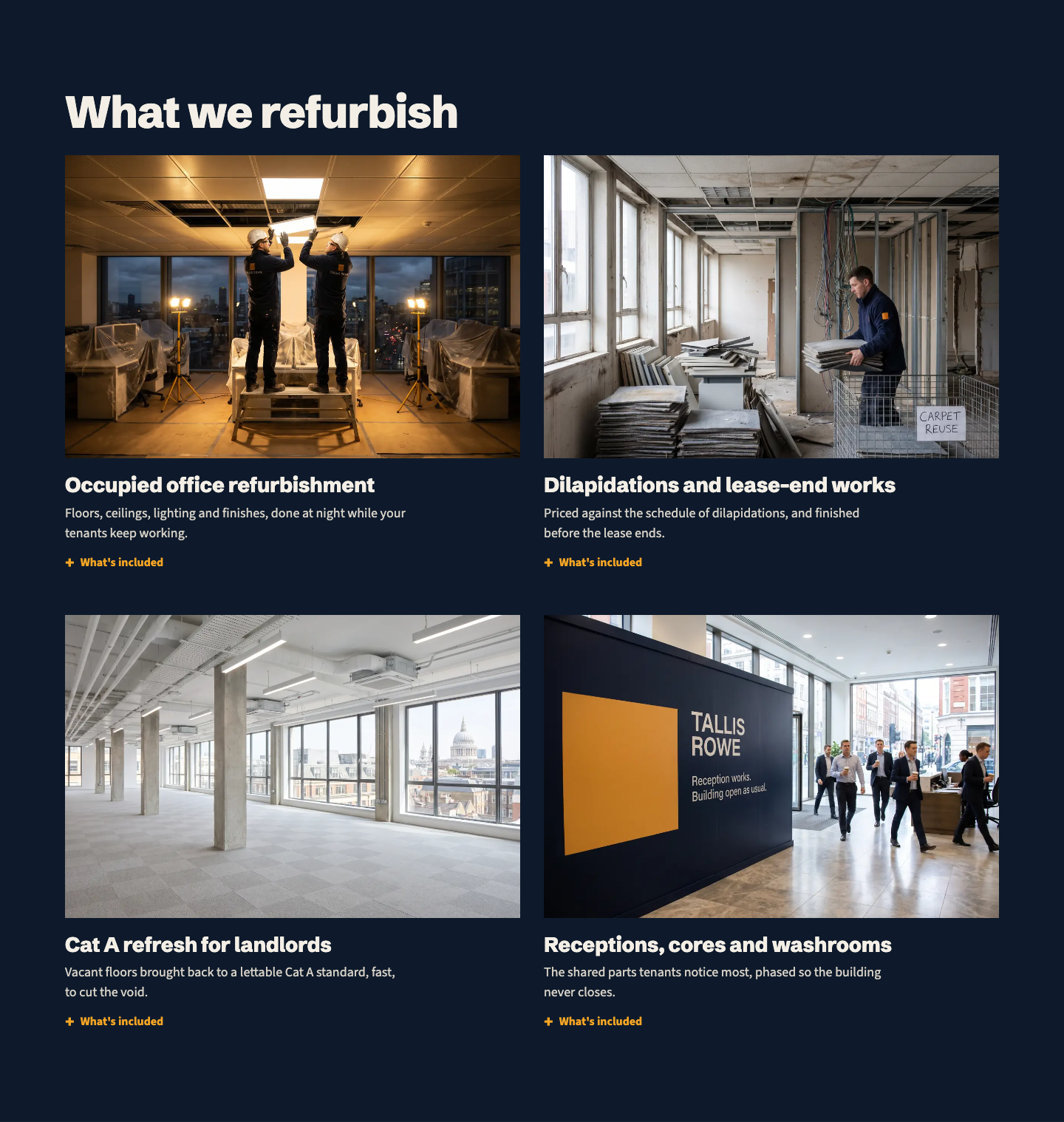
What it does: Occupied refurbishment, dilapidations and lease-end works, Cat A refreshes and common parts. Each has a large photo, one sentence and a "What's included" toggle.
Why it matters: These are the four ways a landlord or occupier comes to a refurbishment contractor. The toggles keep the page short while the detail is still one tap away.
6. Show the Process as One Night
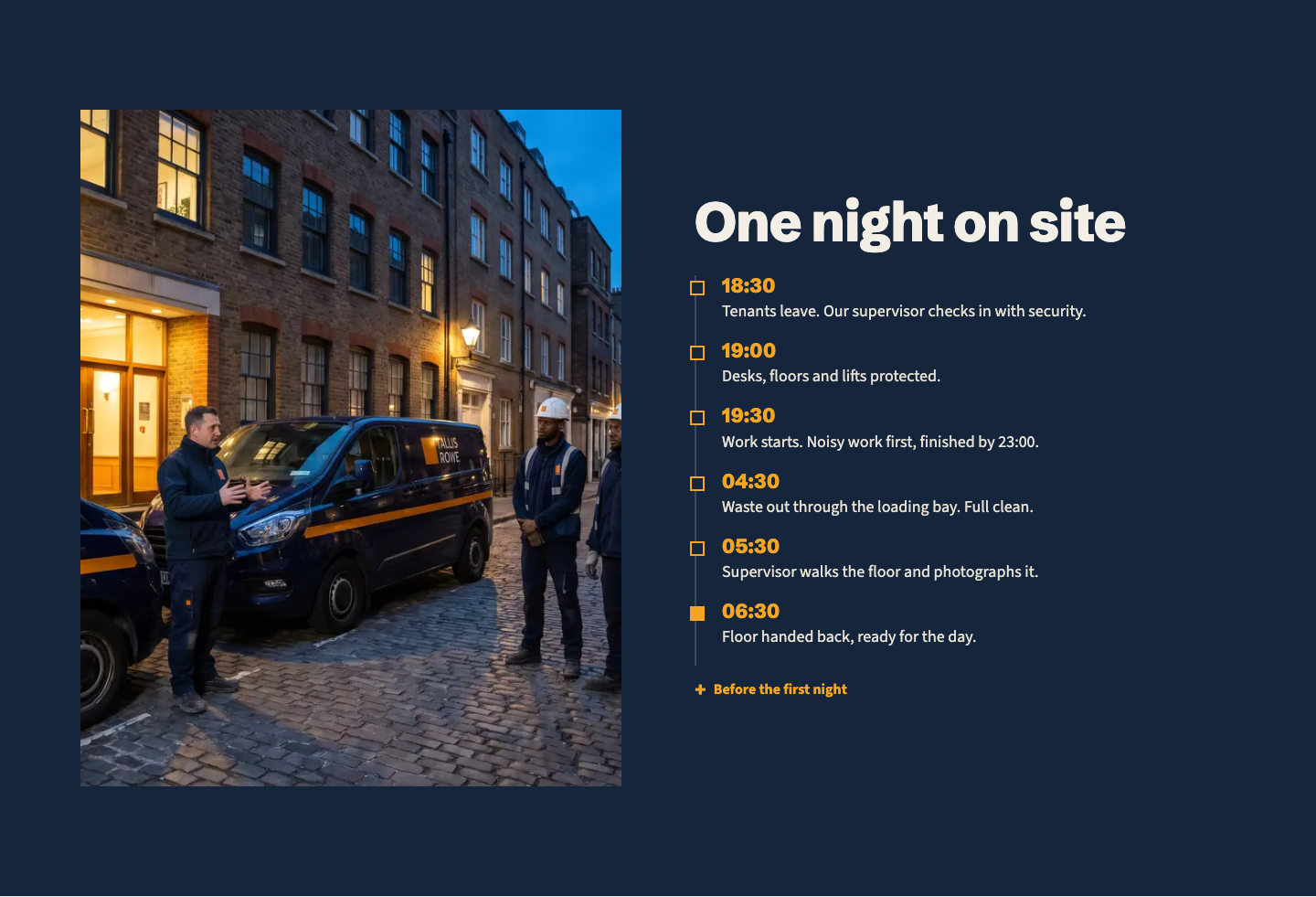
What it does: A timeline of one night on site, from tenants leaving at 18:30 to the floor handed back at 06:30. The steps before the first night sit behind a toggle.
Why it matters: Building managers need to know how the works fit around security, lifts and cleaning. A clock is easier to picture than a five-step process diagram.
7. Speak to Each Buyer in Their Own Terms
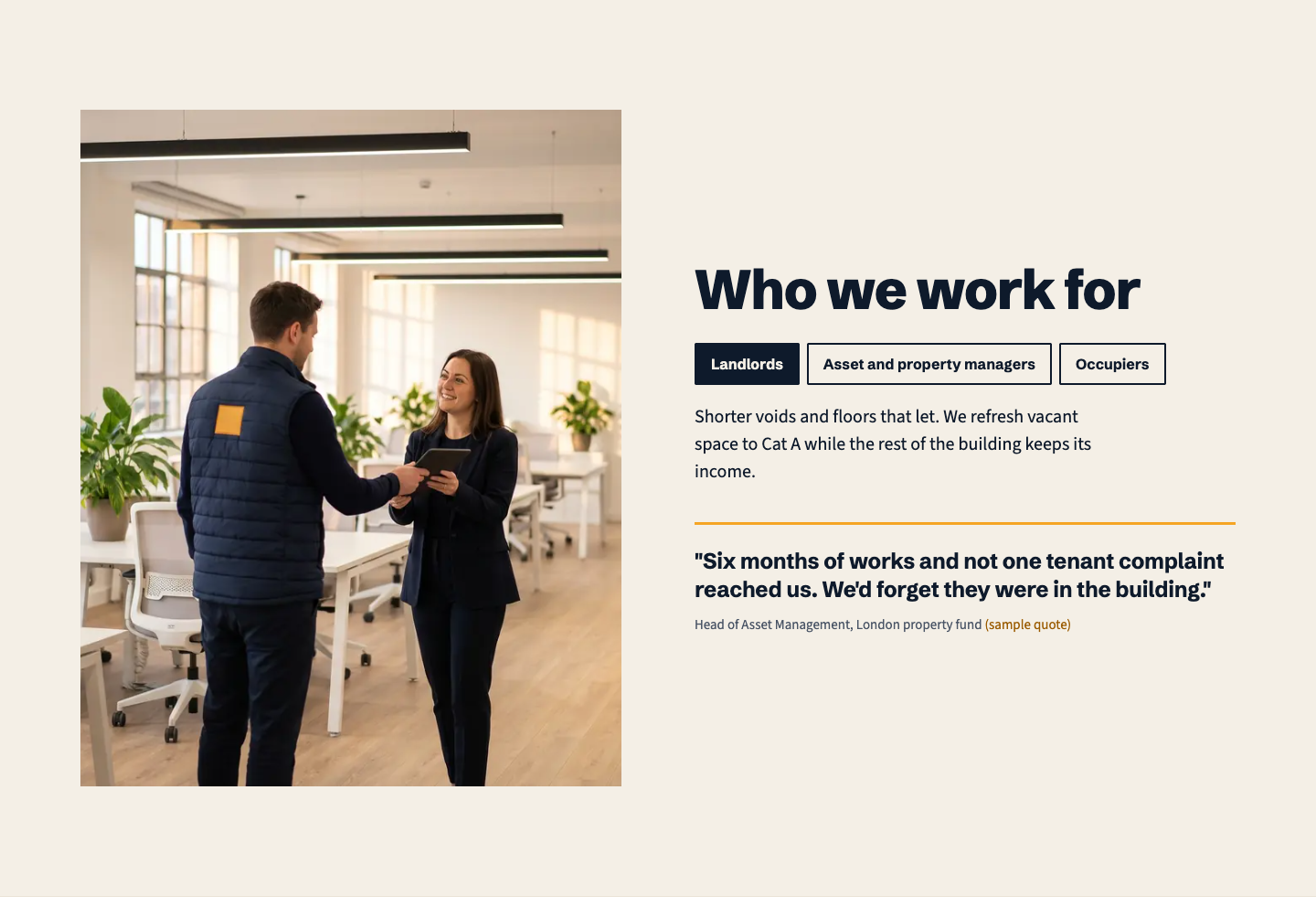
What it does: Three tabs, one for each buyer, with one sentence each. A sample quote from an asset manager sits under them.
Why it matters: A landlord wants a shorter void, a property manager wants no complaints, and an occupier wants to keep working. Tabs say all three without three paragraphs.
8. Health, Safety and Waste as Numbers
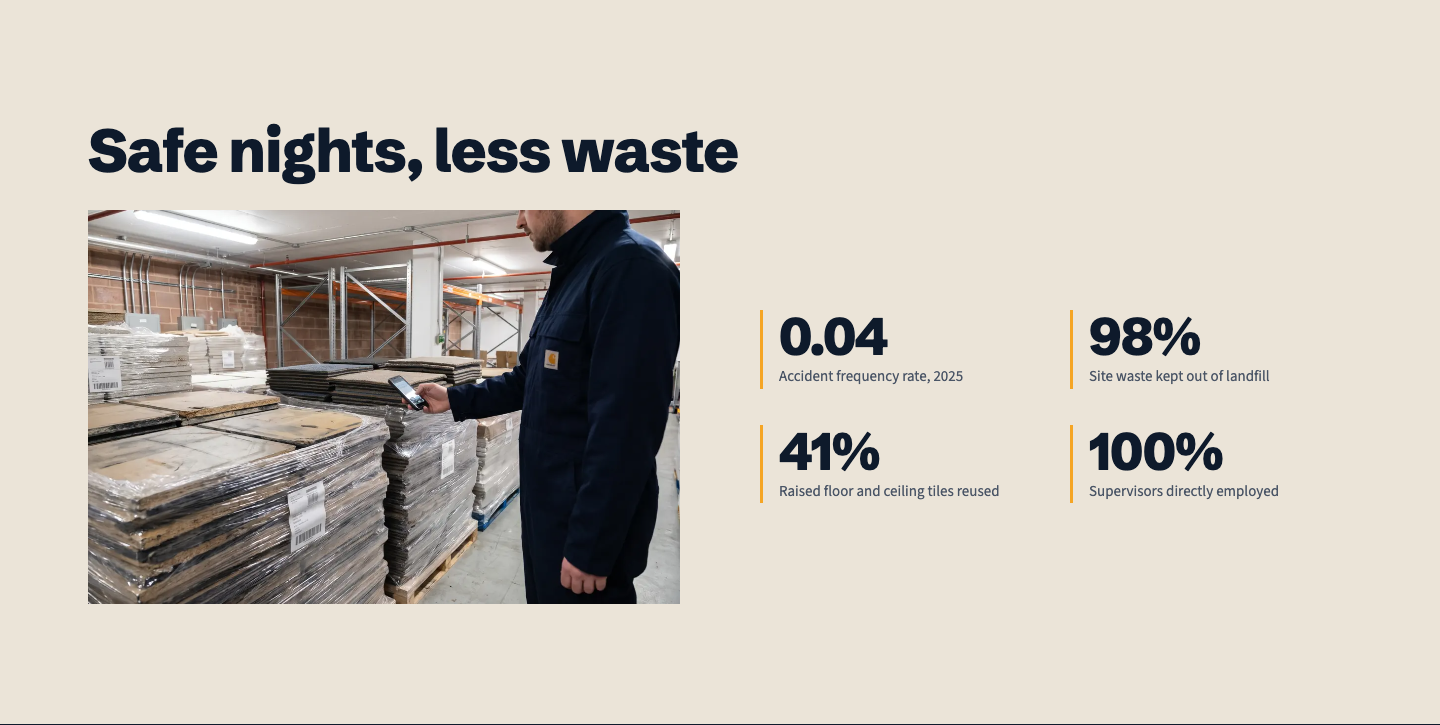
What it does: Accident rate, waste kept out of landfill, materials reused and directly employed supervisors, next to a photo of salvaged floor tiles.
Why it matters: Landlords report on embodied carbon and waste to their investors. Reuse figures from strip-out are evidence they can put in that report.
9. A Survey Form That Asks the Right Questions
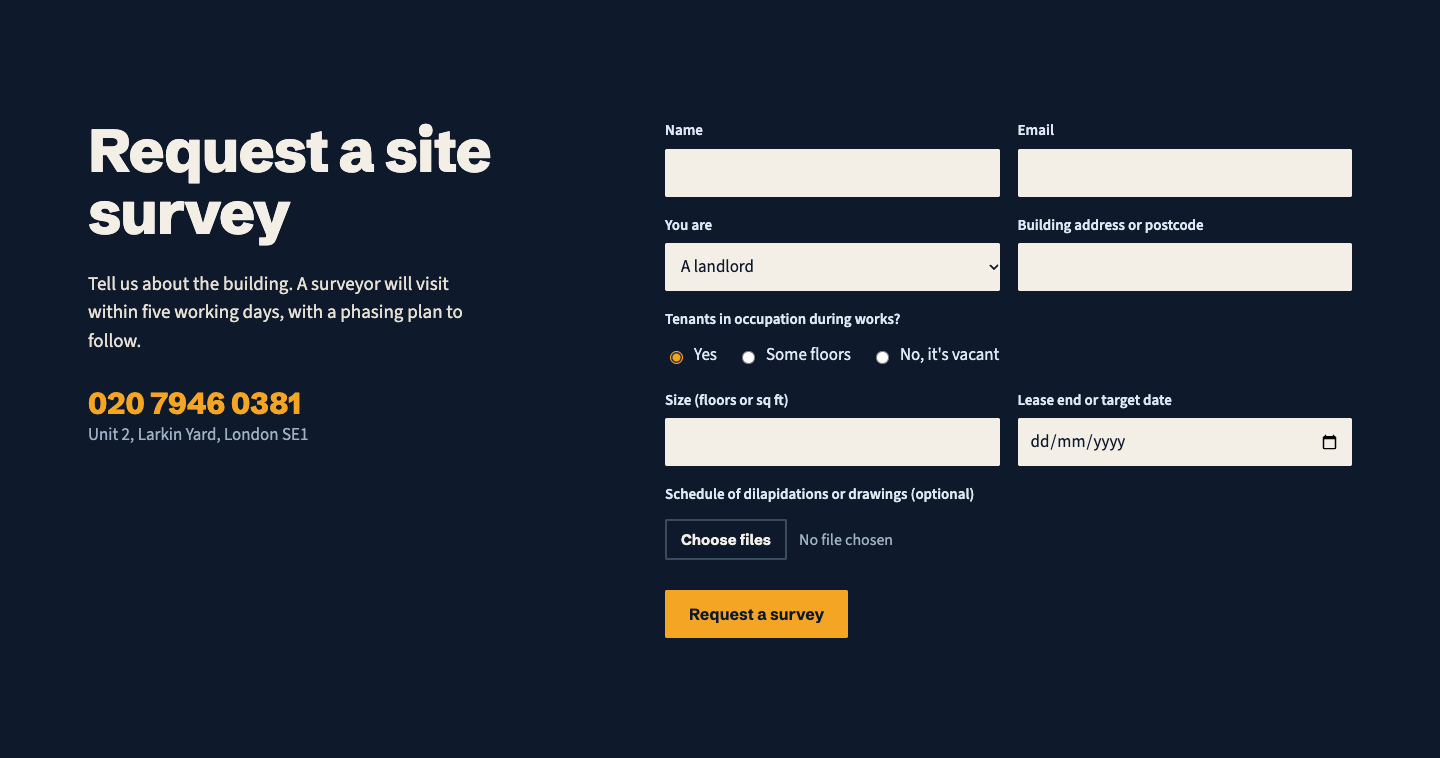
What it does: Name, email, role, building, whether tenants are in, size, lease end date and an upload for the schedule of dilapidations.
Why it matters: Those answers decide the phasing and the price. Asking for them up front means the first reply can be a survey date, not a list of questions.
10. Built for the Phone First
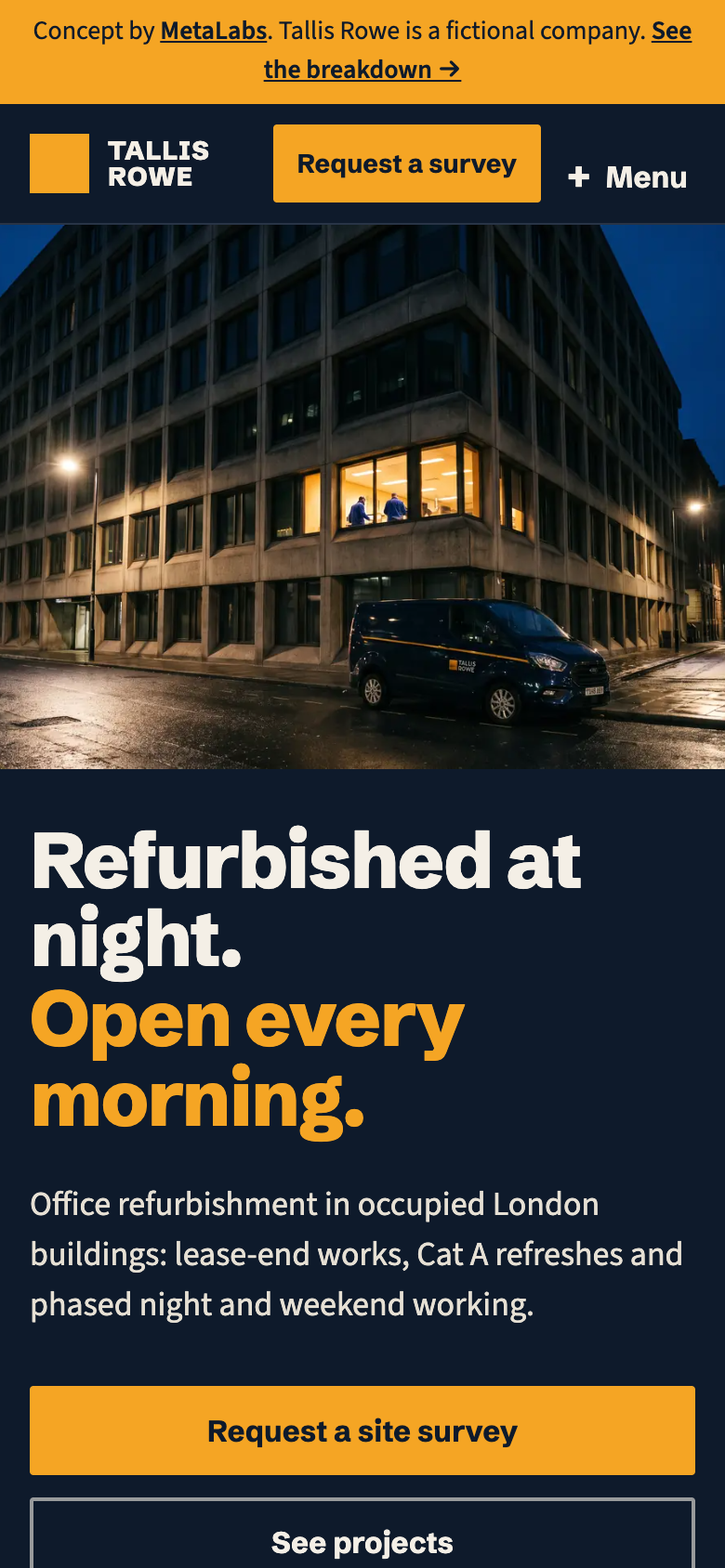
What it does: On a phone, the photo sits above the headline, the survey button stays in the first screen and the building diagram shrinks to fit.
Why it matters: Property managers check contractors between site visits, on their phones. If the headline sits over a busy photo or the diagram needs sideways scrolling, they move on.
The Brand
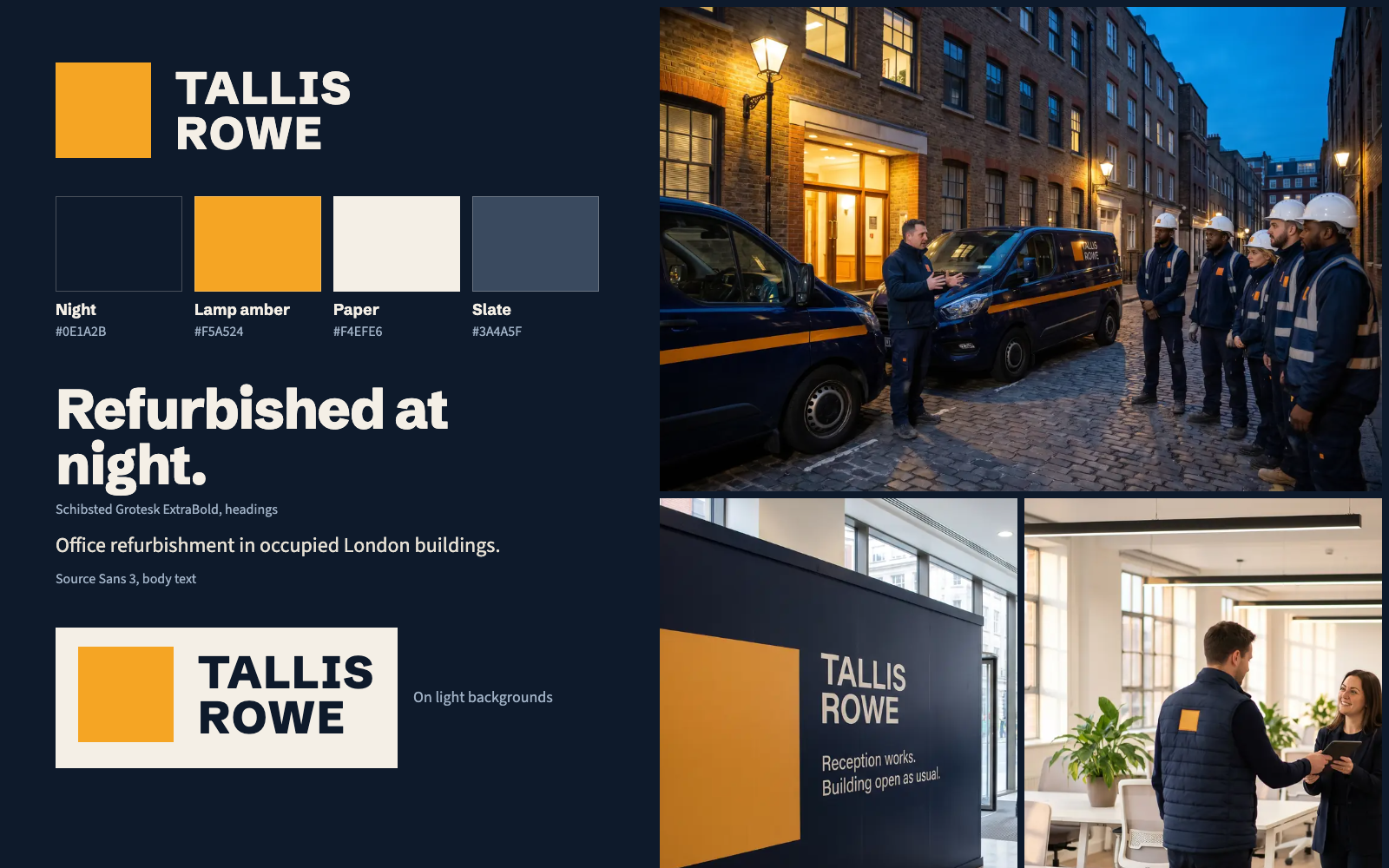
- Logo: an amber square, a single lit window at night, with the name stacked in capitals. It's simple enough to print on a van door, a hoarding or a gilet. Download the SVG.
- Colours: Night #0E1A2B, Lamp amber #F5A524, Paper #F4EFE6 and Slate #3A4A5F.
- Fonts: Schibsted Grotesk ExtraBold for headings and Source Sans 3 for text, both free from Google Fonts.
- Photos: colour, mostly at dusk and night, with the brand on the vans, uniforms and reception hoardings, so every photo looks like the same company.
How Fast It Is
The live concept was tested with Lighthouse, the tool behind Google's PageSpeed Insights, on its standard phone settings:
- Phone: 99 for performance and 100 for accessibility. The main photo loads in about 2 seconds on a simulated mobile connection.
- Layout shift: close to zero, so nothing jumps around while the page loads.
It's a static site served from Cloudflare's network: no WordPress, no plugins and no admin login for bots to guess. The photos are resized for each screen and the fonts load from the same server as the page.
What Its LinkedIn Could Look Like
Asset managers, property managers and building surveyors are on LinkedIn every day. The social half of this concept is what Tallis Rowe would post: three carousels in the same brand as the site, and a plan for the first month.
Carousel 1: Five Things to Agree Before Refurbishing an Occupied Building
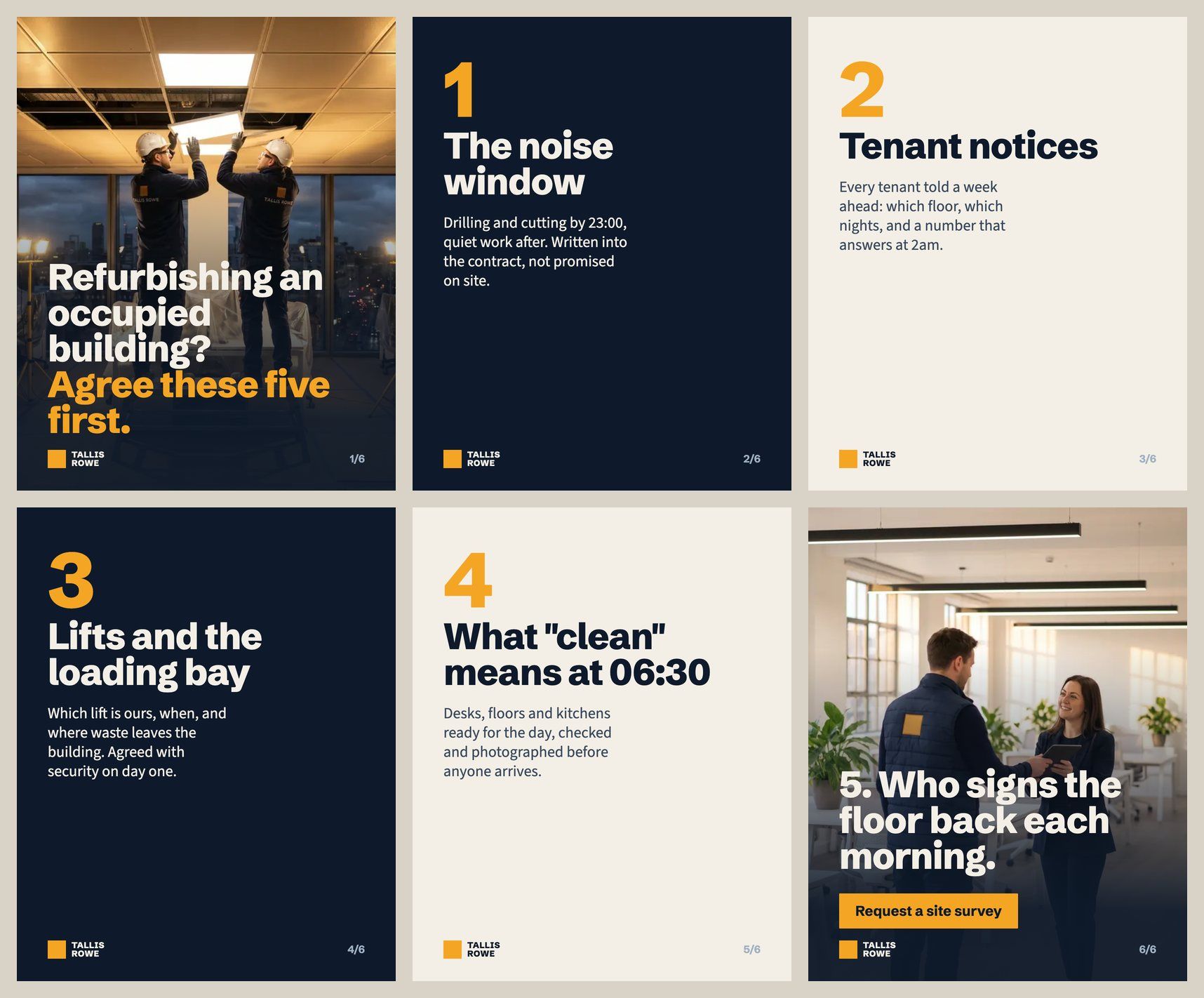
Why this one: A checklist property managers save and send to their landlord. It shows the firm has done this many times without a sales pitch.
- Refurbishing an occupied building? Agree these five first.
- The noise window: drilling and cutting by 23:00, written into the contract.
- Tenant notices: every tenant told a week ahead, with a number that answers at 2am.
- Lifts and the loading bay: agreed with security on day one.
- What "clean" means at 06:30: checked and photographed before anyone arrives.
- Who signs the floor back each morning. Request a site survey.
Carousel 2: A Project in Six Slides
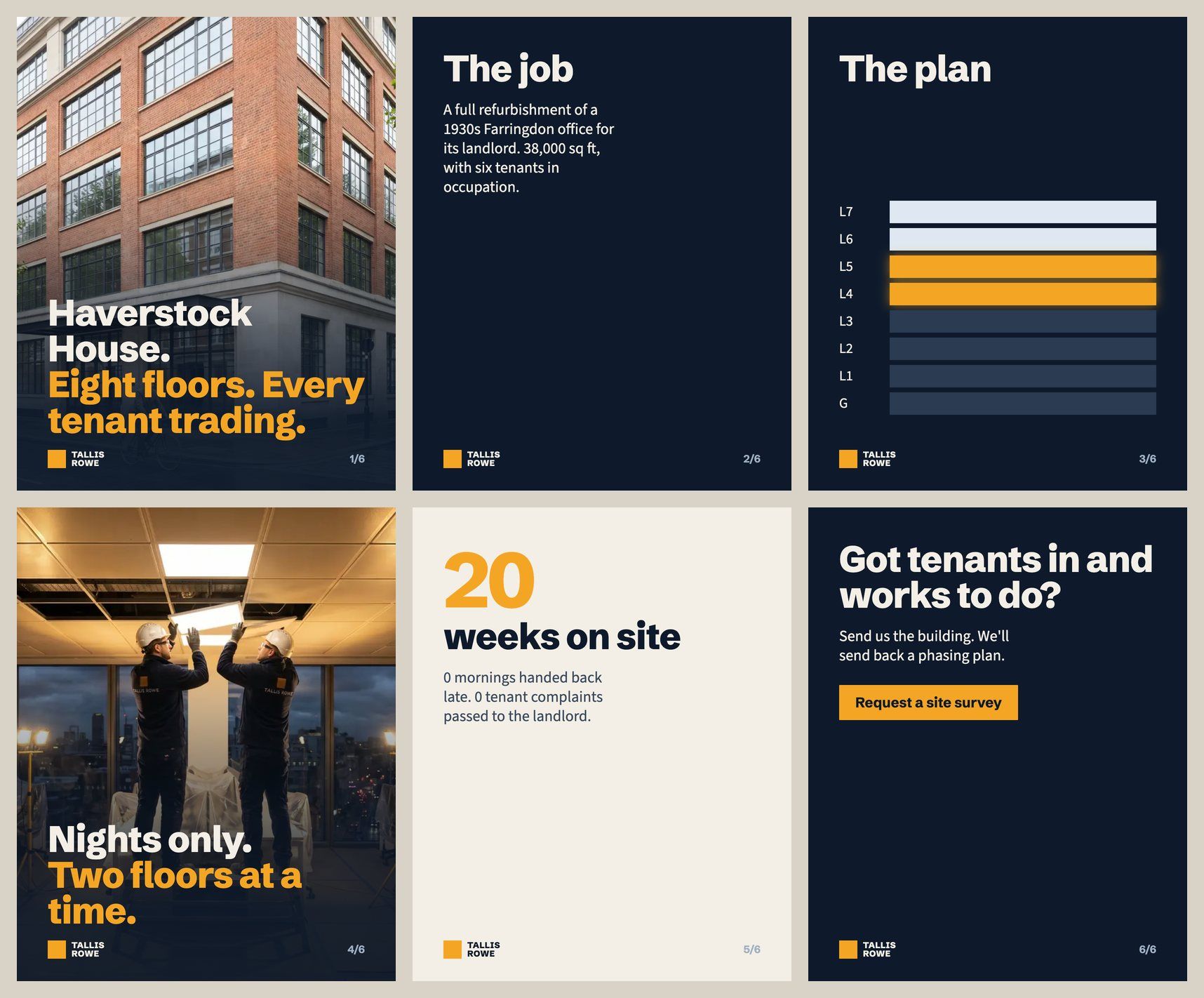
Why this one: The project page cut down to what an asset manager wants to know: the building, the size, the phasing and how the tenants found it.
- Haverstock House. Eight floors. Every tenant trading.
- The job: a 1930s Farringdon office, 38,000 sq ft, six tenants in.
- The plan: two floors at a time, top down, shown as the building.
- Nights only.
- 20 weeks on site. 0 mornings handed back late.
- Got tenants in and works to do? Request a site survey.
Carousel 3: Four Ways Landlords Lose Money at Lease End
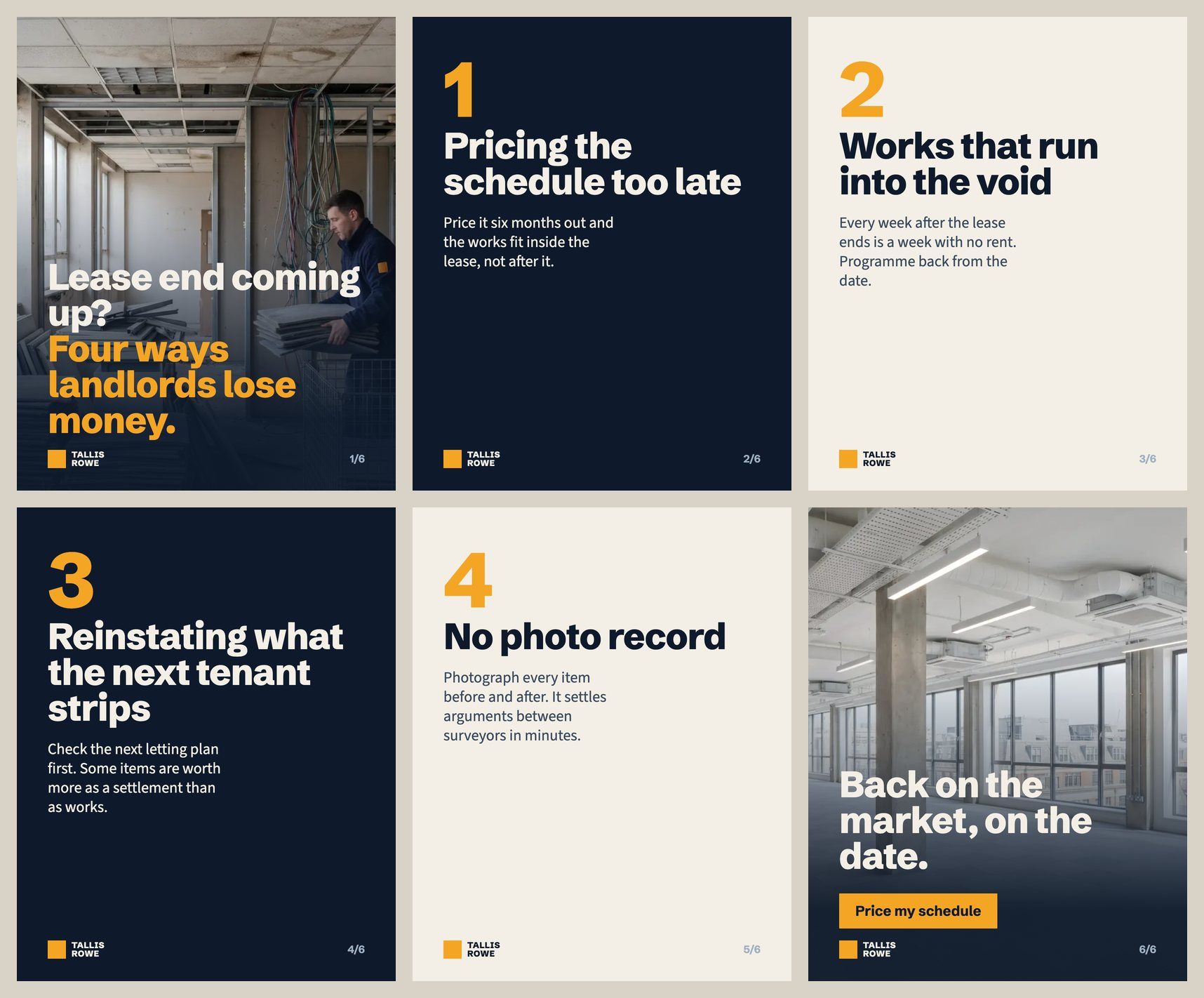
Why this one: Dilapidations is where refurbishment contractors win work from landlords and occupiers alike. Practical advice puts the firm in the conversation months before the lease ends.
- Lease end coming up? Four ways landlords lose money.
- Pricing the schedule too late.
- Works that run into the void.
- Reinstating what the next tenant will strip out.
- No photo record.
- Back on the market, on the date. Price my schedule.
The First Four Weeks
Two posts a week: a carousel on Tuesday and something from site on Thursday. The directors reshare from their own profiles, because property managers follow people more than company pages.
- Week 1: carousel 1 (five things to agree) on Tuesday, then a night photo of a floor in works with one line on the building on Thursday.
- Week 2: carousel 2 (Haverstock House) on Tuesday, then a before and after of one lease-end floor, side by side on Thursday.
- Week 3: carousel 3 (dilapidations) on Tuesday, then a 30-second video of a supervisor's 05:30 walk-round on Thursday.
- Week 4: a one-image post with the month's numbers: floors handed back, nights worked, complaints on Tuesday, then a post on the next start dates for occupied works on Thursday.
What Every Refurbishment Contractor Website Should Include
- What you refurbish, where, and a survey button in the first screen
- Proof you can work with tenants in, shown rather than claimed
- Projects with building, area, size and programme
- Separate services for occupied refurbishment, dilapidations and Cat A refreshes
- How a night or weekend shift runs, from tenants leaving to handback
- A line for each buyer: landlords, property managers and occupiers
- Health, safety and waste figures, not slogans
- Accreditations as text, near the top
- A form that asks about occupancy and the lease end date
- A brand that carries through to the vans, hoardings and uniforms in the photos
For real UK examples and the full checklist, see Construction Website Design: UK Examples and What They Get Right. For a new-build fit-out firm's version, see Hollis Yard.
Tallis Rowe is fictional, and so are its buildings and projects. All names, figures, accreditations and quotes on the concept site and in the carousels are illustrative, and the photos are AI-generated.