The Brief
Glenvarra Shopfitting is a made-up shopfitting and joinery firm in Cookstown, Co Tyrone. It fits out shops, cafés, bars and pharmacies across Northern Ireland and the Republic, and makes its counters and fixtures in its own workshop. Its website is a concept, built to show what a shopfitter's site can look like when it is designed around how retail, hospitality and pharmacy operators choose a fit-out firm.
Research came first. Most shopfitters' sites in Northern Ireland and Ireland lead with a slideshow, a photo of the vans and a strip of client logos. Few give a project's size or programme, few show the workshop, and almost none show the thing operators care about most: that the store keeps trading. So the brief was a site built around the night shift, with a brand of its own, big colour photos and very little text.
The Searches a Firm Like This Could Win
Few people search for "shopfitting website design". The value is in the searches a shopfitter's own site could rank for. Most of them have a keyword difficulty of 0, so a well-built page with real projects can reach page one.
| Search | Monthly searches | Difficulty |
|---|---|---|
| shopfitting | 300 | 0 |
| retail fit out | 300 | 0 |
| shopfitters | 150 | n/a |
| commercial joinery | 150 | 0 |
| architectural joinery | 100 | 0 |
| shopfitting companies | 90 | 0 |
| fit out companies northern ireland | 60 | n/a |
| joinery belfast | 50 | n/a |
| bespoke joinery (Ireland) | 400 | 55 |
| shopfitters ireland (Ireland) | 40 | n/a |
Ahrefs, Google UK database (Northern Ireland is part of it) unless marked Ireland, October 2026. Difficulty is Ahrefs Keyword Difficulty, 0 to 100; n/a means no data.
The Brand
Each concept gets a brand of its own, built for the trade. Glenvarra's mark is a lit shop window, the moment a refit is finished. It appears on the site, the vans, the hi-vis and the workshop sign.


- Espresso
#17130f - Shop-light amber
#f2a33a - Cream
#f6e9d6 - Walnut
#2e261e
- Fonts: Unbounded for headlines (wide and confident, like shop signage) and DM Sans for text.
- Colour: espresso and walnut browns for the night, with amber from the shop lights for buttons, figures and the logo.
- Files: mark, logo on dark, logo on light (SVG).
1. Say What You Do and Where, Over Your Own Van
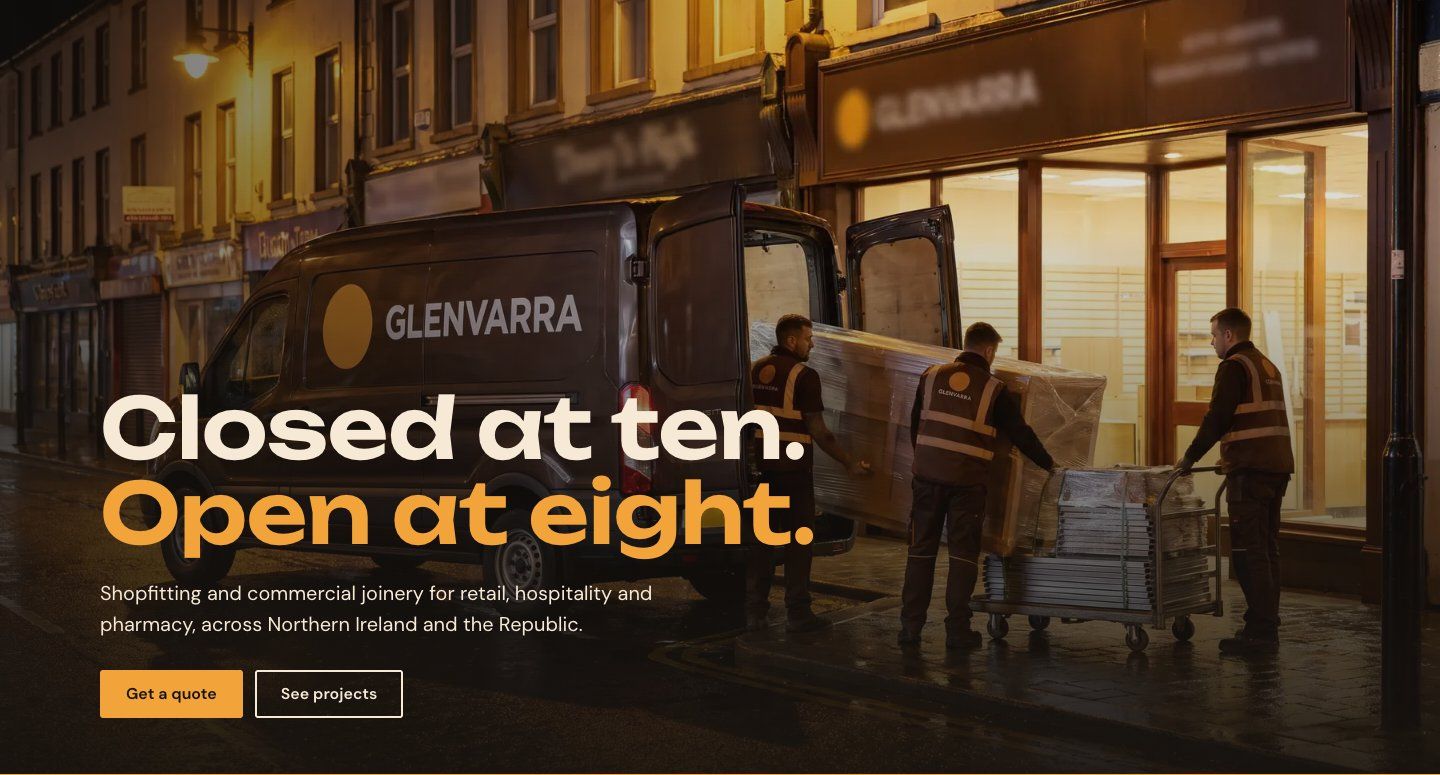
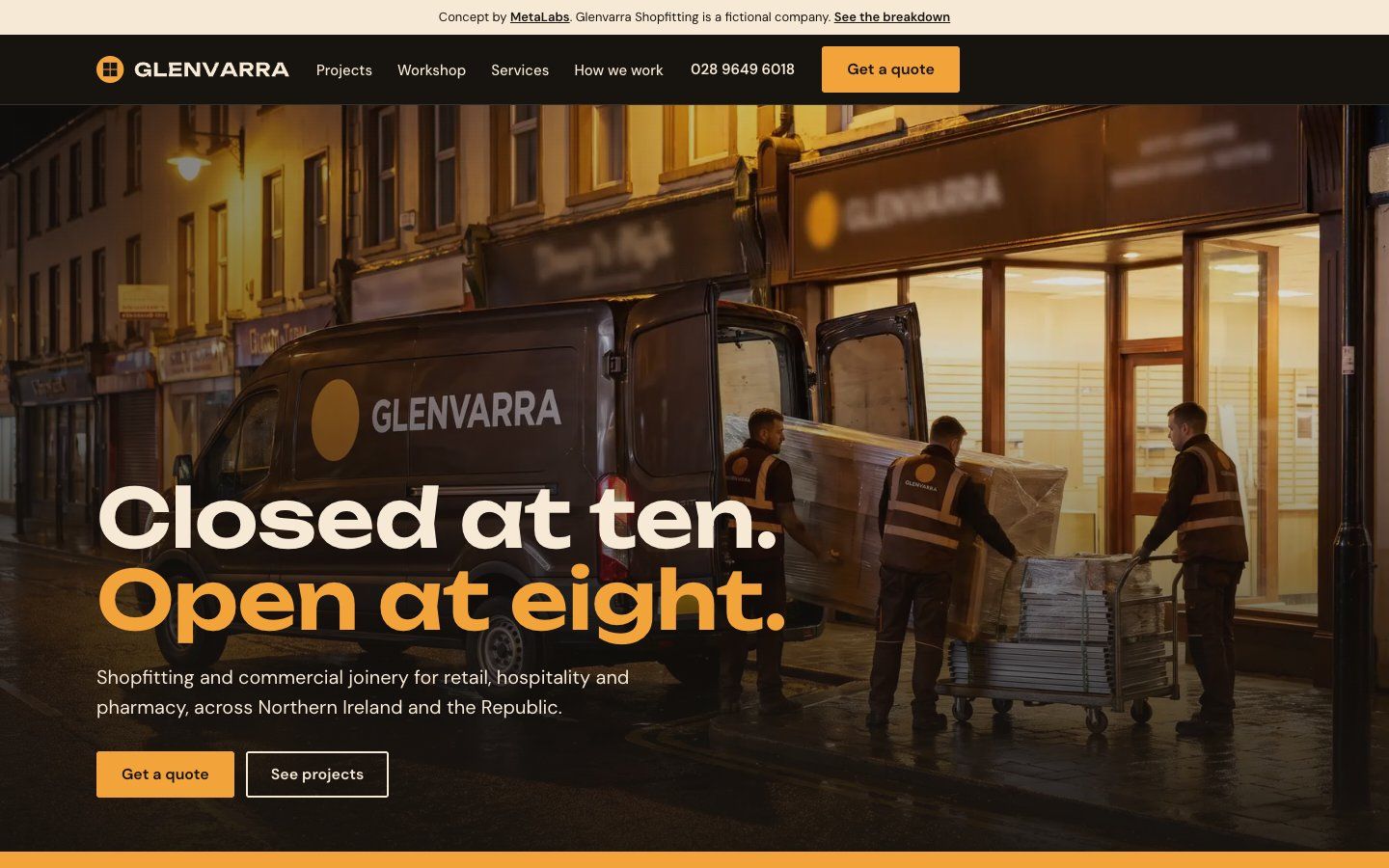
What it does: A six-word promise, one line naming the trade, the sectors and the area (Northern Ireland and the Republic), and two buttons: Get a quote and See projects. The phone number sits in the header.
Why it matters: A retail or pharmacy group's first worry is lost trading. The headline answers it before anything else. The photo shows the firm's own van and crew, so the brand is real from the first screen.
2. A Trust Strip in the Brand Colour

What it does: Four figures (years, stores fitted, counties covered and trading days lost) and the accreditations as plain text.
Why it matters: Property and store development managers pre-qualify suppliers. Figures and schemes as text are quicker to scan than a strip of logos, and "32 counties" says North and South in two words.
3. The Signature: Drag Through the Night
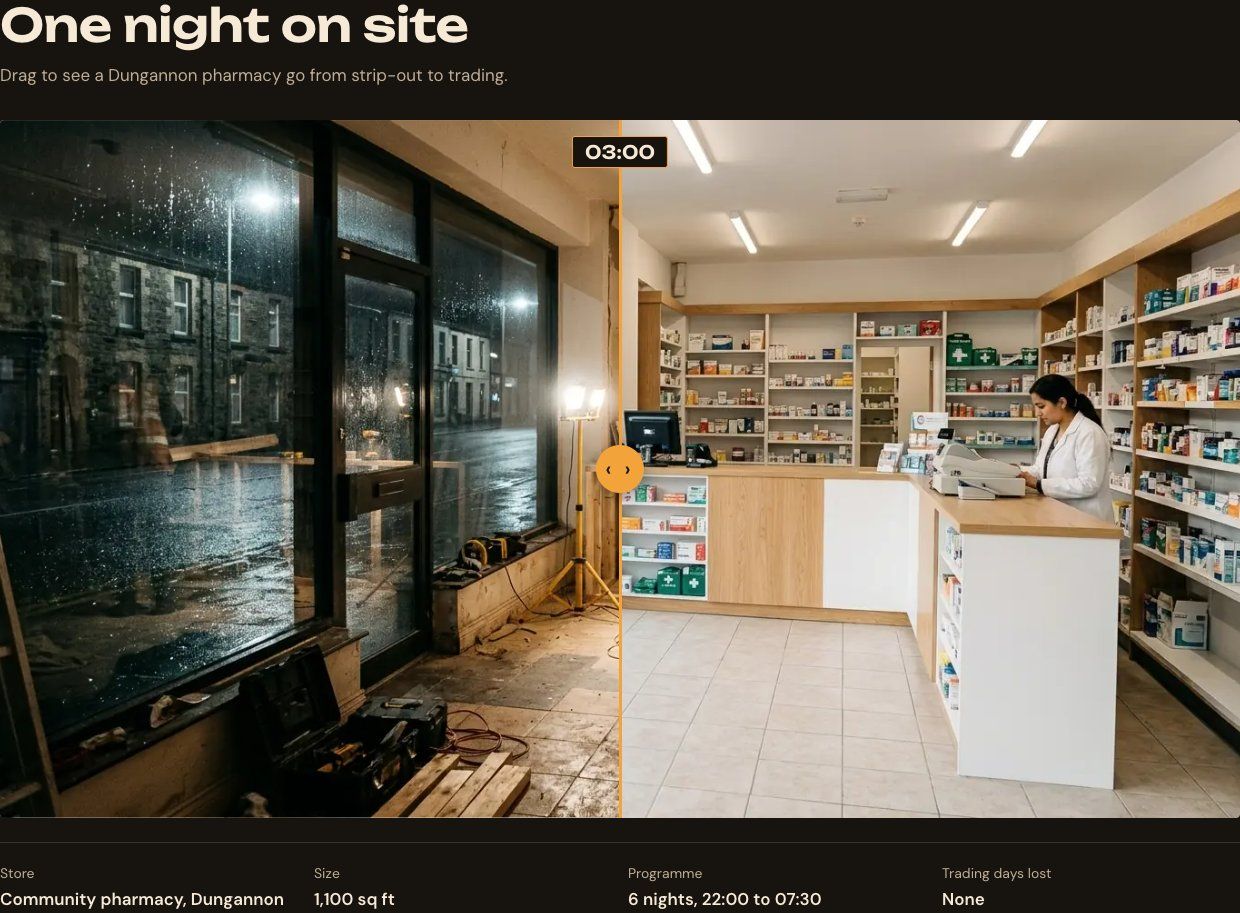
What it does: A before and after slider of one pharmacy. As the visitor drags, the clock runs from 22:00 to 08:00 and the store goes from strip-out to trading. Under it: the store, its size, the programme and the trading days lost.
Why it matters: Every shopfitter says it can work out of hours. This shows it in one gesture, and it is the part of the site people remember and share. It works with a keyboard too.
4. Projects With a Sector Filter
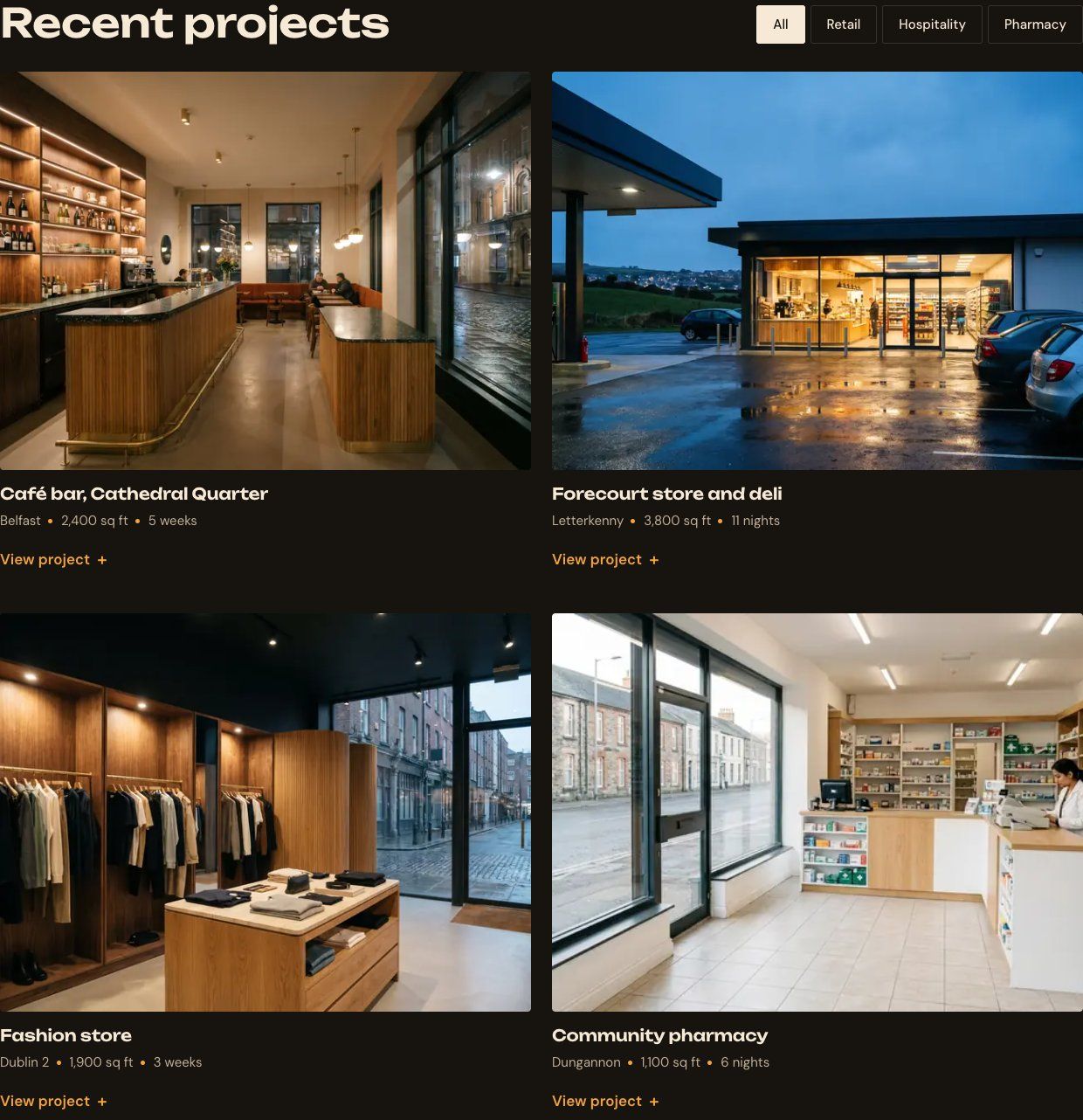
What it does: Four projects, each with a photo, name, location, size and programme. Filter buttons narrow them to retail, hospitality or pharmacy, and "View project" opens the scope and value.
Why it matters: A pharmacy group wants to see pharmacies. The filter gets each buyer to their own sector in one tap, and the card gives them the three things they compare: size, place and time on site.
5. Show the Workshop
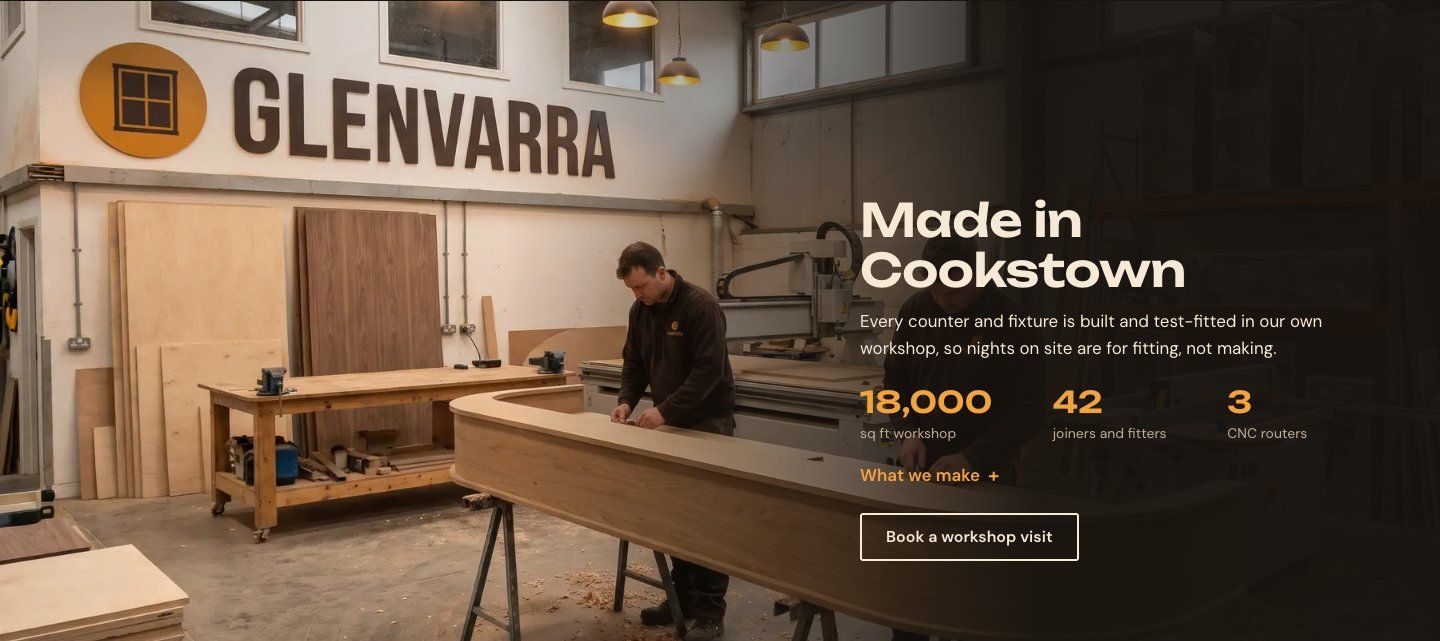
What it does: A full-width photo of the joinery workshop with the firm's sign, one line on why it matters, three figures and a "What we make" toggle. The action is a workshop visit.
Why it matters: Making joinery in-house is what lets a shopfitter promise short nights on site, and it is what the joinery searches look for. A visit to the workshop is often what wins a rollout.
6. Services as Tabs, Each With a Photo
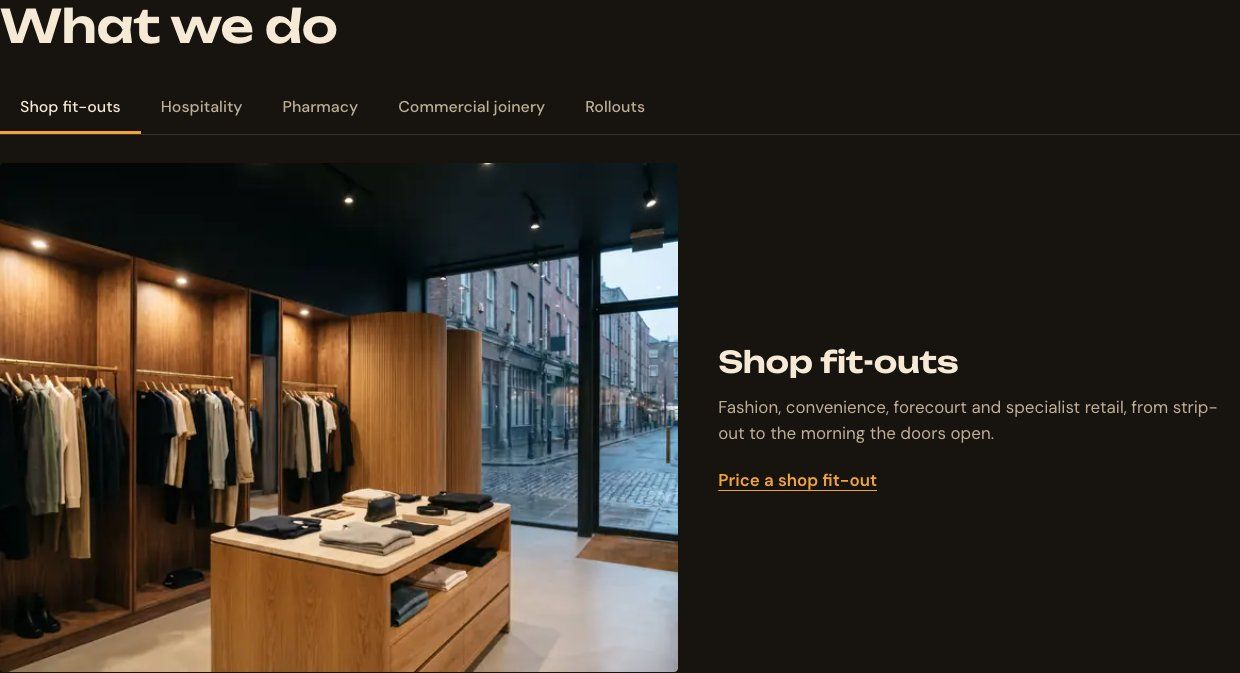
What it does: Five tabs: shop fit-outs, hospitality, pharmacy, commercial joinery and rollouts. Each shows a photo, one line and its own quote link.
Why it matters: Tabs keep five services to one screen. Commercial joinery gets its own tab because fit-out contractors buy it on its own, and rollouts get one because that is where repeat work comes from.
7. The Process as a Night Timeline
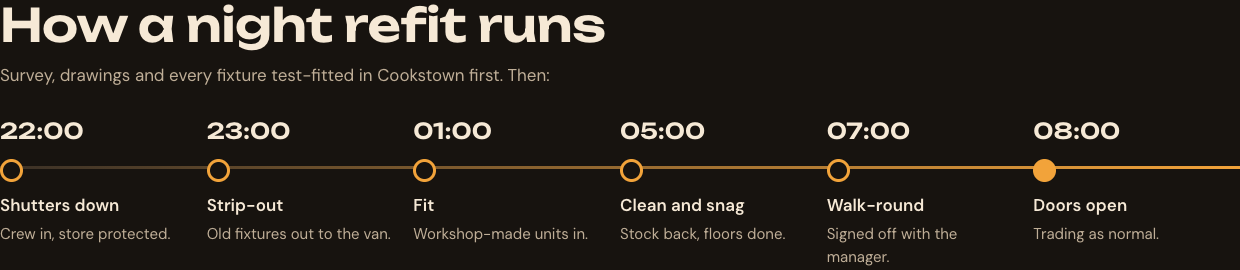
What it does: Six times from 22:00 to 08:00, each with two or three words of what happens.
Why it matters: Store managers want to know what happens while they are not there. A timeline answers it faster than a paragraph, and it repeats the promise from the hero.
8. Health, Safety and Waste as Numbers
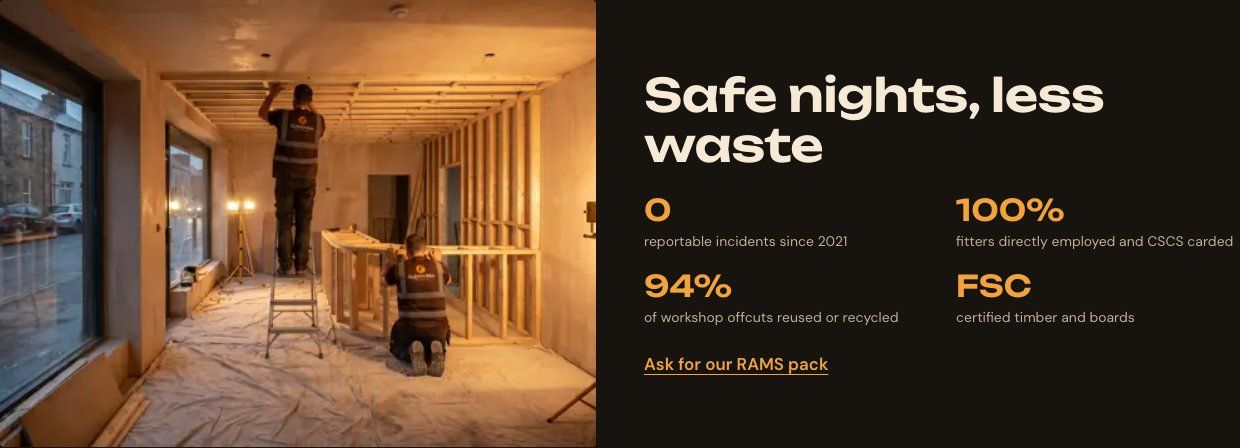
What it does: Four figures: reportable incidents, directly employed and carded fitters, workshop offcuts reused or recycled, and certified timber. The action asks for the RAMS pack.
Why it matters: Night work in an occupied building is the job buyers worry about most. Numbers answer the questions in their pre-qualification form, and a sustainability figure helps national retailers report on their supply chain.
9. A Quote Form Built Around Stores
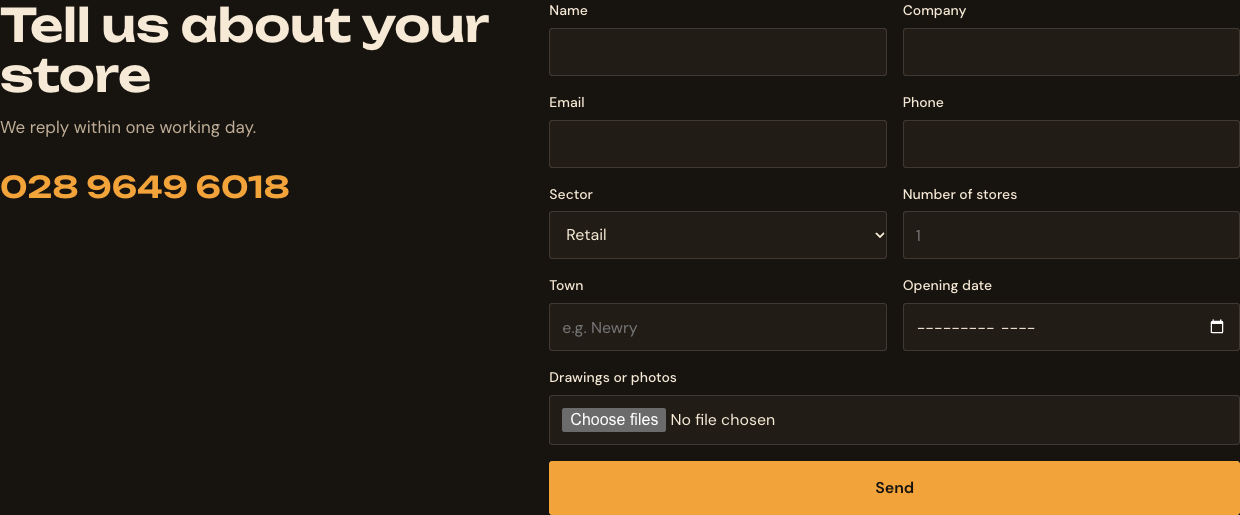
What it does: Contact details, sector, number of stores, town, target opening date and an upload for drawings or photos.
Why it matters: "Number of stores" spots a rollout in the first message, and the opening date tells the firm how urgent it is. The phone number is there too, because many store managers would rather call.
10. Built for the Phone First
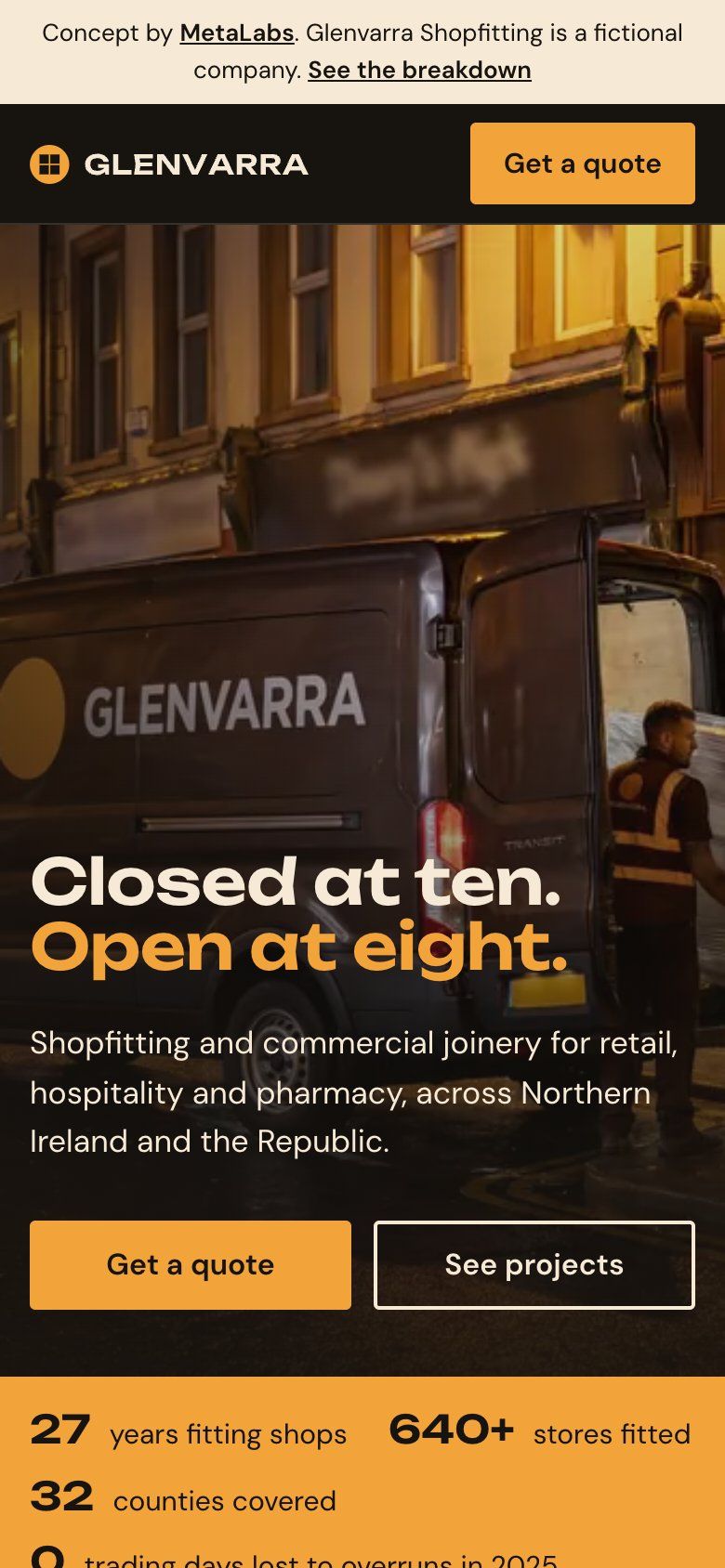
What it does: On a phone the quote button stays in the header, the slider works with a thumb, the timeline turns vertical and the form becomes one column.
Why it matters: Store and area managers look at suppliers on their phones, often in the store itself. If the slider or the form fails on a phone, the site loses the people it was built for.
How Fast It Is
The live concept was tested with Lighthouse, the tool behind Google's PageSpeed Insights, on its standard phone settings:
- Phone: 96 for performance, 100 for accessibility and 100 for best practices, with no layout shift.
Like the other concepts, it is a static site served from Cloudflare's network: no WordPress, no plugins and no admin login for bots to guess. Photos are resized for each screen and the fonts load from the same server as the page.
What Its LinkedIn Could Look Like
Retail, hospitality and pharmacy operators, and the fit-out contractors who buy joinery, are on LinkedIn. The second half of this concept is what Glenvarra would post: three carousels in the brand, and a plan for the first month.
Carousel 1: How a Pharmacy Gets Refitted Without Closing
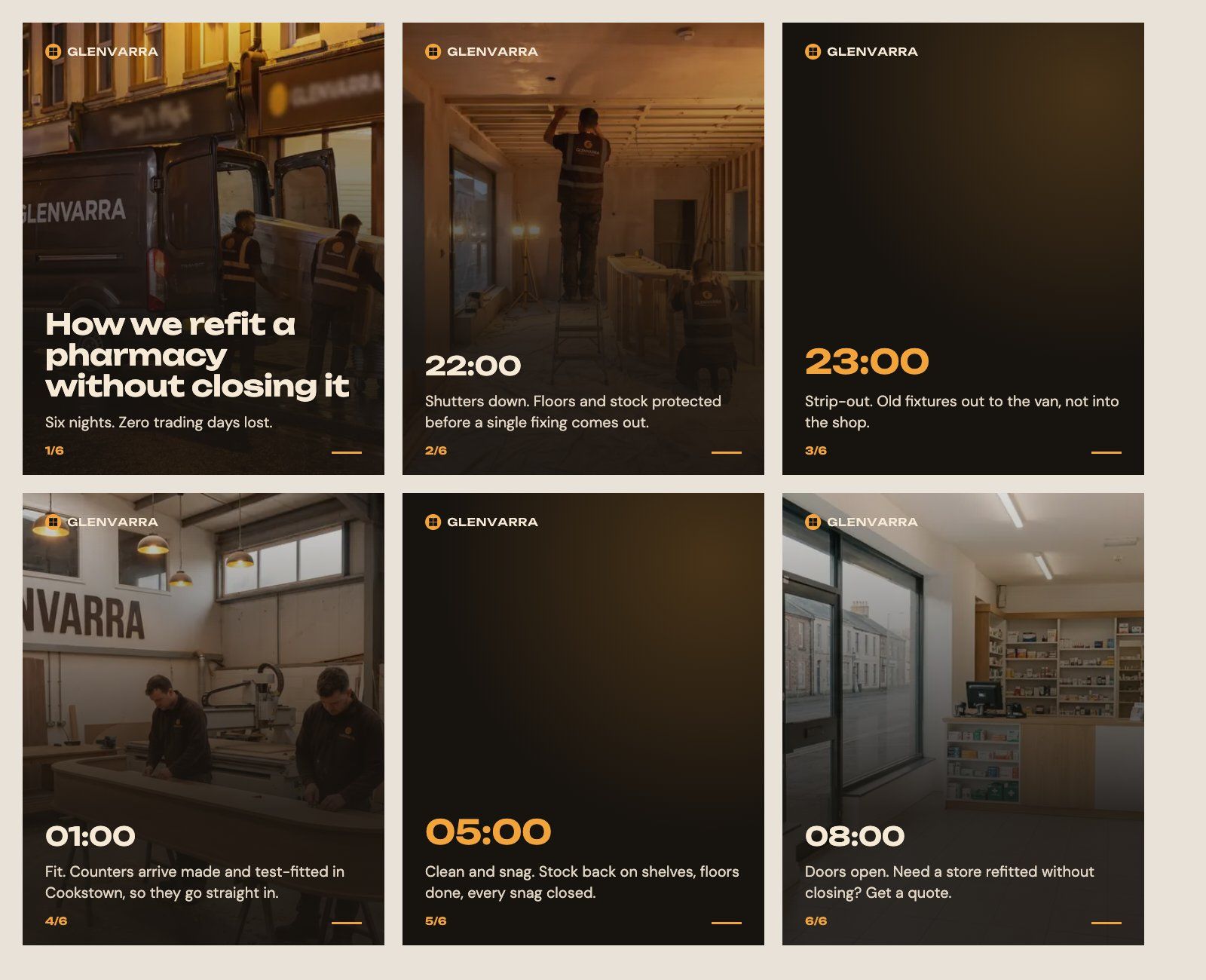
Why this one: The site's signature told as a post. Pharmacy and retail operators save it because it answers the question they would ask on a call.
- How we refit a pharmacy without closing it. Six nights, zero trading days lost.
- 22:00: shutters down, floors and stock protected.
- 23:00: strip-out, old fixtures straight to the van.
- 01:00: counters arrive made and test-fitted, so they go straight in.
- 05:00: clean and snag, stock back on the shelves.
- 08:00: doors open. Need a store refitted without closing? Get a quote.
Carousel 2: A Rollout in Six Slides
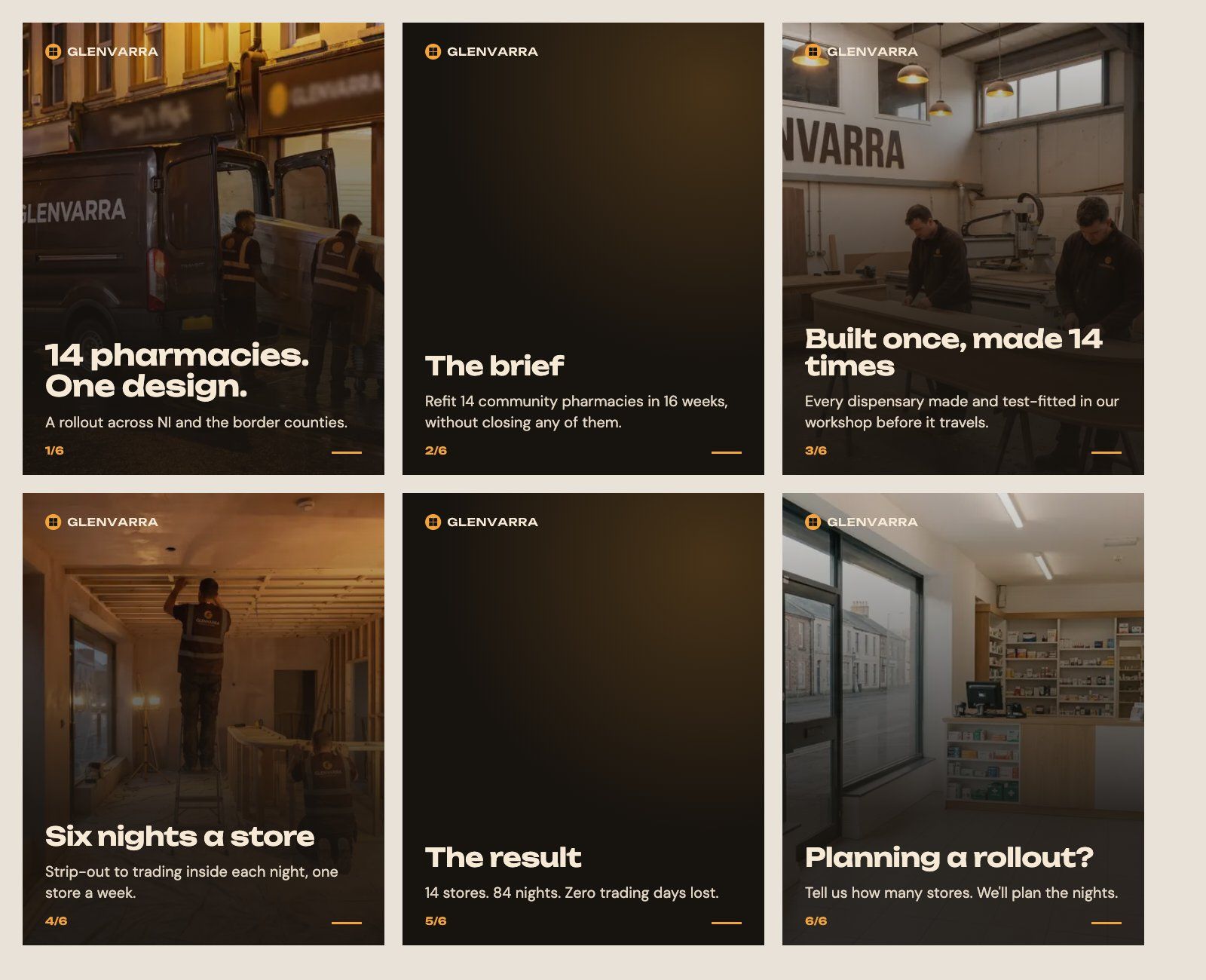
Why this one: Rollouts are where repeat work comes from. This shows the firm can run one, with the figures a group's property manager would ask for.
- 14 pharmacies, one design: a rollout across NI and the border counties.
- The brief: 14 stores in 16 weeks, none closed.
- Built once, made 14 times in the Cookstown workshop.
- Six nights a store, one store a week.
- The result: 14 stores, 84 nights, zero trading days lost.
- Planning a rollout? Tell us how many stores.
Carousel 3: What a Counter Goes Through
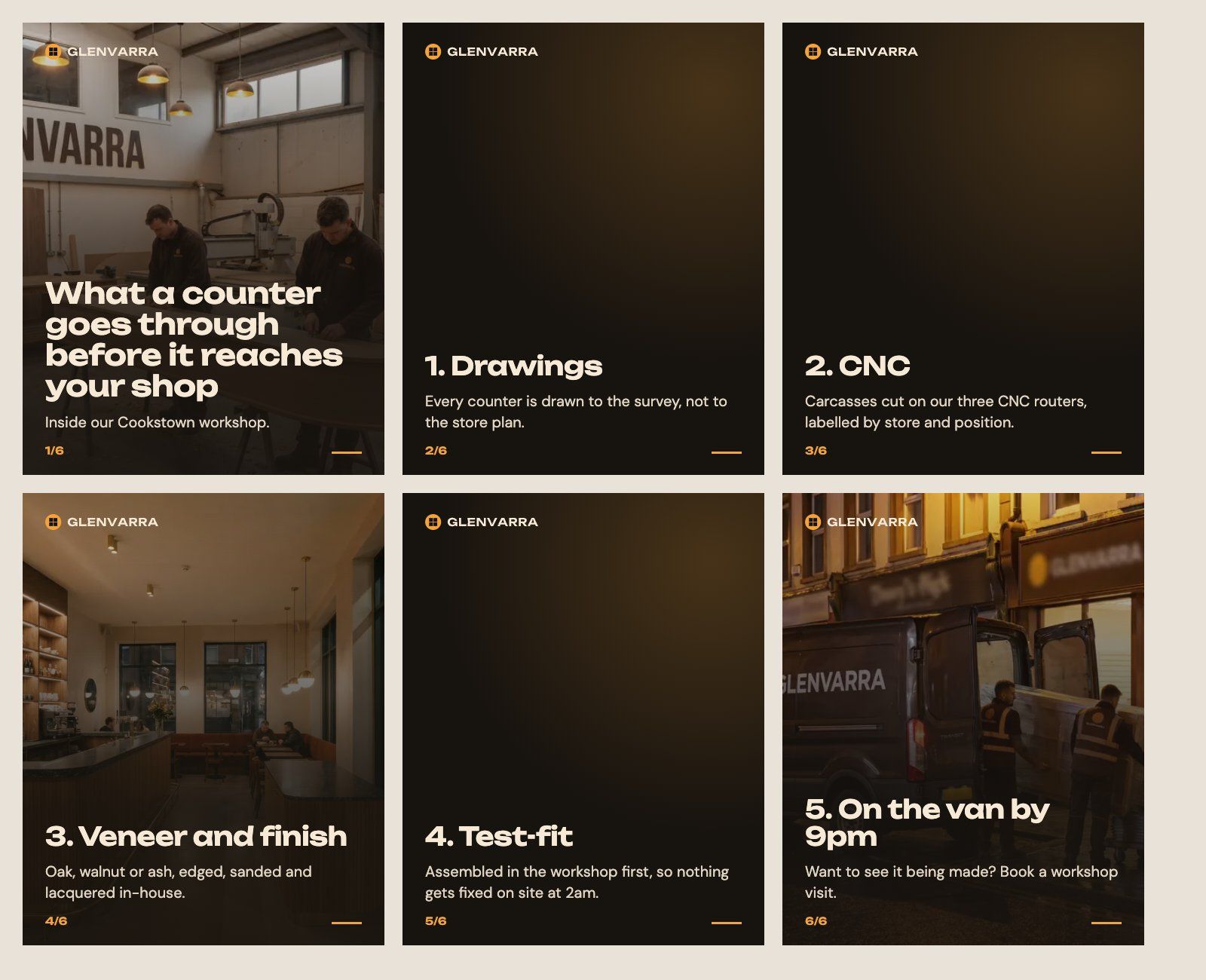
Why this one: Workshop content shows the craft behind the joinery searches, and gives fit-out contractors a reason to send drawings for joinery on its own.
- What a counter goes through before it reaches your shop.
- Drawn to the survey, not the store plan.
- Cut on the CNC routers, labelled by store and position.
- Veneered, edged and lacquered in-house.
- Test-fitted in the workshop first.
- On the van by 9pm. Book a workshop visit.
The First Four Weeks
Two posts a week: a carousel on Tuesday and something from a store or the workshop on Thursday. The directors and site managers reshare from their own profiles, because people follow people more than company pages.
- Week 1: carousel 1 (the night refit) on Tuesday, then a 20-second timelapse of one night in a store on Thursday.
- Week 2: carousel 2 (the 14-store rollout) on Tuesday, then a photo of the crew and van outside a store at 10pm, with one line on where on Thursday.
- Week 3: carousel 3 (inside the workshop) on Tuesday, then a careers post: joinery apprentices, with a photo from the workshop on Thursday.
- Week 4: a before and after pair from one store, with its size and nights on site on Tuesday, then a capacity post for operators: rollout slots for spring on Thursday.
What Every Shopfitter's Website Should Include
- What you do, the sectors and the area, in the first line
- A quote button and a phone number on every screen
- Figures and accreditations as text, near the top
- Projects with size, location and programme, filtered by sector
- Proof that stores keep trading: night work, programmes, trading days lost
- The workshop, if you make your own joinery
- Rollouts as a service of their own
- Health, safety and waste as numbers
- A quote form that asks how many stores and when they open
For real UK examples and the full checklist for construction companies, see Construction Website Design: UK Examples and What They Get Right. For an office fit-out firm's version, see the fit-out company website guide and the first concept, Hollis Yard.
Glenvarra Shopfitting is fictional. All names, figures, accreditations and quotes on the concept site and in the carousels are illustrative, and the photos are AI-generated.